04:16

A summary of our 2025 study https://www.mdpi.com/2076-2615/15/22/3256 on the contributions of animal agriculture to climate change and broader environmental harms. The findings suggest that, globally, animal agriculture accounts for 12 - 20% of greenhouse gas emissions annually, and probably more. In light of the forecasted failure to keep warming to 1.5 °C above pre-industrial averages, policy makers at COP30 and elsewhere are urged to urgently enact commitments to reduce production and consumption of animal-sourced foods.
Full study: Mace, J.L.; Knight, A.; Vieira, F.; Tatemoto, P.; Gamei...
17:53

56 billion animals are killed every year for their meat, but at what cost?
This documentary exposes the impact the animal agriculture industry not only has on our planet in terms of climate change & global warming, but also the millions of species we share it with.
It also sheds a light on what we can do to change this - veganism, reducing meat consumption, and being more organic in our diet.
13:36
We are currently living through the sixth mass extinction since fossil records began. This video describes previous mass extinction events and the causes of the current one - mainly habitat destruction for livestock production, pollution and climate change. Some 1/3 of all species are expected to go extinct, with some ecosystems, such as coral reefs, most severely affected. People will also be affected, as rivers dry up, rising oceans flood coastal regions and crop yields decline. The livestock sector currently contributes around 16% of all human-generated greenhouse gases – more than all f...
50:57
The human-caused (anthropogenic) rate of species extinction is already 1,000 times more rapid than the ‘natural’ rate of extinction typical of Earth’s long-term history, with the result that we are currently living through one of the very few mass extinctions to date. It is clear that climate change represents the greatest threat to life on Earth for many millennia.
Given the urgency with which we must reduce the size of our collective ecological footprint, it is remarkable that so little attention has been afforded to livestock production. The inconvenient truth is that the emissions res...
01:25:07
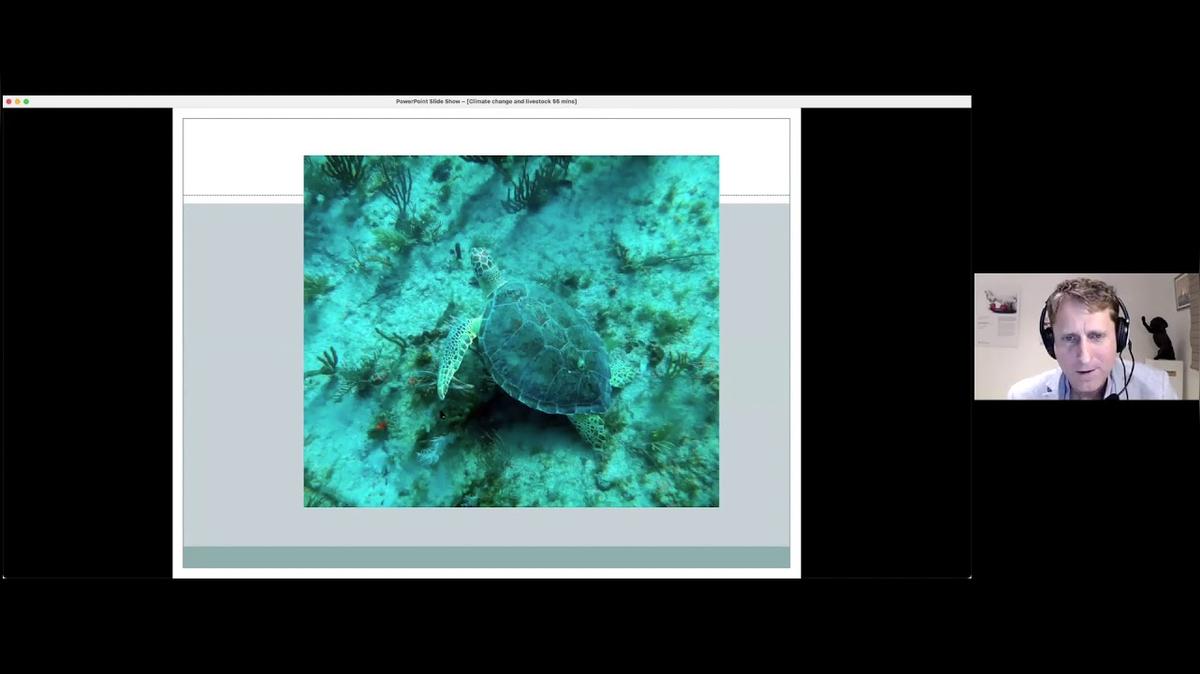
The human-caused (anthropogenic) rate of species extinction is already 1 000 times more rapid than the “natural” rate of extinction typical of Earth’s long-term history. It is clear that climate change represents the greatest threat to life on Earth for many millennia. Given the urgency with which we must reduce the size of our collective ecological footprint, it is remarkable that so little attention has been afforded to livestock production. The inconvenient truth is that the emissions resulting from clearing land to graze livestock and grow feed, from the livestock themselves, and from p...
03:38

There are around 160 million farmed animals based in New Zealand. The heavy national footprint of animal agriculture within New Zealand has had devastating impacts for its environment, public health, and animal welfare. This report describes how, and why, a transition to a cleaner, greener, plant-based future, can be achieved. Most of the concerns are applicable to any country, as are the solutions. The full report is ‘The Green Protein Report: Meeting New Zealand’s Climate Change Targets by 2030 Through Reduced Reliance on Animal Agriculture’, by Jasmijn de Boo and Prof. Andrew Knight. Fin...
12:14

To what extent should we protect animals’ rights? How much do animal lives matter, and why? How far should we go to protect animals? On 24th April 2022 I was asked to address these topics, within the ‘Choral contemplation’ series arranged by Somerville College at the University of Oxford. This was my presentation (albeit delivered within the beautiful surrounds of the Somerville College Chapel).
14:15

The Hunger Paradox:
HOW ANIMAL AGRICULTURE DEVOURS CLIMATE, SPECIES, AND FOOD SECURITY
Professor Andrew Knight
Adjunct Veterinary Professor of Animal Welfare
Murdoch University School of Veterinary Medicine, Australia
The overall message of this interview with Professor Andrew Knight is that animal agriculture is a major driver of planetary destruction, fueling climate change, extinction, deforestation, and freshwater depletion. It significantly contributes to potent greenhouse gases like methane and nitrous oxide, and its conversion of plants to animal products is highly inefficient, wa...